22/12/2025
International trade – which transport method to choose for your company?
International trade requires well-planned logistics, and one of the key aspects is choosing the right mode of transport. This decision affects not only costs and delivery time but also the possibility of transporting specific goods and meeting customs requirements. What transport options are available, and which one is best for your company?
Road transport – flexibility and speed
Road transport is one of the most commonly chosen ways to move goods in Europe. It offers flexibility in terms of routes and delivery schedules and allows the transport of almost any type of cargo. It is particularly advantageous for less-than-truckload shipments and express deliveries.
Advantages: Short delivery times for medium and long distances (e.g., from Germany to Poland in 1-2 days) Door-to-door delivery, no need for transshipment Good option for less-than-truckload shipments, express deliveries, and goods requiring fast transport
Disadvantages: Delivery time affected by road conditions (traffic, weather) Weight restrictions and ADR transport regulations Higher costs compared to rail transport over long distances
For whom? An excellent choice for companies transporting goods within Europe and requiring flexible delivery schedules.
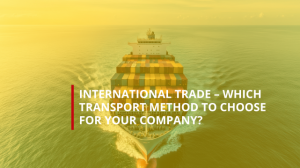
Sea transport – cost-effective for long distances
For companies importing goods from distant countries such as China or the United States, sea transport is often the most economical choice. Container ships allow for the transport of large quantities of goods at relatively low unit costs.
Advantages: Low transport costs for large quantities of goods (e.g., a 40HC container from China to Poland – from USD 2,500) Ability to transport various types of cargo (containers, bulk cargo, refrigerated goods) High efficiency on international routes
Disadvantages: Long transport time (from China to Poland, on average 30-40 days) Risk of delays in ports, e.g., due to customs clearance Additional costs for transshipment and last-mile transport
For whom? Ideal for importers of large volumes of goods, especially in international trade with Asia and America.
Air transport – speed at a cost
Companies that require express delivery often choose air transport. It is the fastest mode of transport but also the most expensive, which is why it is mainly used for high-value goods or shipments requiring immediate delivery.
Advantages: Very short delivery time (e.g., from the USA to Poland in 1–3 days) Low risk of goods damage Ability to transport goods requiring special conditions (e.g., pharmaceuticals, electronics)
Disadvantages: Very high costs (e.g., a 100 kg shipment from China may cost from USD 2,000) Limited cargo capacity Additional customs and documentation procedures required
For whom? For companies needing immediate delivery, e.g., in the pharmaceutical, technology, or e-commerce sectors.
Rail transport – a compromise between time and cost
Rail transport is becoming increasingly popular, especially on routes from China to Europe as part of the New Silk Road. It is faster than sea transport and cheaper than air, making it a good compromise between time and cost.
Advantages: Stable delivery times (e.g., from China to Poland around 12-18 days) Lower costs than air transport A good option for goods requiring a medium delivery time
Disadvantages: Limited network – availability of routes depends on infrastructure Need for transshipment due to different track gauges (e.g., in Kazakhstan) Possible delays at borders due to customs clearance
For whom? A good choice for companies importing goods from Asia and wanting faster delivery than by sea but cheaper than by air.
How to choose the best transport for your company?
The choice of the right type of transport depends on several factors:
 Type of goods – do they require special transport conditions? (e.g., refrigerated, ADR, oversized goods)
 Delivery time – does the transport need to be express, or can you allow a longer term?
 Costs – what budget can be allocated for logistics?
 Route – how far is the destination? Are direct connections available?
If your company is engaged in international trade and needs support with customs handling and transport organization, it is worth using an experienced customs agency. This way, you can avoid problems related to documentation, customs clearance, and border inspections.
Do you have questions about transport and customs procedures? Contact us – we will help you choose the best solution for your company!