16/12/2025
Timber transport – a comprehensive guide for importers and exporters
Timber transport – a comprehensive guide for importers and exporters
Timber transport, whether in the form of sawn timber or long logs, is a key element of global raw materials trade. It requires in-depth knowledge of different transport methods and compliance with strict customs and phytosanitary regulations, especially in international timber trade.
In this article, we outline the most common timber transport methods, customs formalities for import and export, and best practices for securing cargo to ensure it reaches its destination safely.
Types of timber transport
Sawn timber transport
Sawn timber consists of processed wood in the form of boards or beams, packed into standardized bundles that facilitate transport and storage. A standard bundle typically has a volume of approximately 1 m³ and can be transported by:
Road transport – most commonly using flatbed trucks, allowing easy loading and unloading
Rail transport – especially suitable for large volumes transported over long distances
Sea transport – used for exports to distant countries, with timber shipped in containers
Long timber (logs) transport
Long timber refers to wood with lengths exceeding standard sawn timber dimensions. Due to its size, it requires specialized transport solutions, such as:
Trucks with telescopic trailers – designed for carrying long loads
Rail transport – an alternative to road transport, particularly in countries with well-developed rail infrastructure
Inland waterway transport – log rafting on rivers or transport by barges in regions with extensive waterways
Securing timber during transport
To ensure timber arrives in good condition, proper cargo securing is essential:
Packaging – sawn timber stacked into bundles and secured with straps or stretch film
Load securing straps – stabilizing the cargo to prevent movement during transport
Supports for long timber – additional trailer supports to prevent tipping or damage
Customs formalities for timber import and export
Transporting timber between countries involves meeting numerous customs and phytosanitary requirements. Key aspects include:
Timber import
Timber legality certificates – imports from non-EU countries may require certificates such as FLEGT (for selected countries) or FSC, confirming legal origin
Phytosanitary permits – timber may be subject to sanitary inspections to prevent pests and diseases
Customs duties and VAT – timber imported from outside the EU is subject to customs duties; procedures such as 42/4200 may allow VAT deferral upon import
Timber export
Restrictions and sanctions – exports to certain countries may be restricted due to sanctions (e.g. Russia, Belarus)
Required documentation – commercial invoice, transport documents, and applicable legality certificates
Phytosanitary inspections – depending on the destination country, a fumigation certificate may be required
Insurance and risks in timber transport
Due to its susceptibility to mechanical damage and weather conditions, timber should be adequately insured. Transport insurance policies may cover risks such as:
Mechanical damage (e.g. broken boards, deformed logs)
Moisture and mould (especially during long sea transport)
Accidents and unforeseen events (e.g. cargo tipping, theft)
Summary
Timber transport, both domestically and in international trade, requires specialist knowledge and experience in logistics and customs clearance. PKS International CARGO S.A. provides comprehensive transport and customs services, supporting importers and exporters in the efficient and compliant movement of timber.
Need support with timber transport and customs clearance? Contact us – we ensure professional handling and the safety of your cargo.
Household goods for relocation – what you should know before customs clearance

Road transit from China through Poland to Europe – handling LCL shipments under T1 procedure
International trade – which transport method to choose for your company?
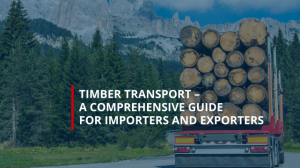
Timber transport – a comprehensive guide for importers and exporters